
Inheritance Lawyer in Portugal
Estate Division, Inventory Proceedings, Wills and Estates With Assets in Another Country
An inheritance opens with a death, and what follows is the declaration of heirs, the division of assets and the disputes that arise from it. And, increasingly, successions involving more than one country.
When an Inheritance Lawyer Acts
- Estate division between heirs, with or without agreement
- Inventory proceedings (inventário), whether bringing or responding to one
- Declaration of heirs (habilitação de herdeiros)
- Estates with assets or heirs in another country
- Wills and succession planning
- Inherited property that cannot be divided
- Gifts made during lifetime that unbalance the division
- Deaths abroad that have yet to be registered in Portugal
If your situation is on this list, what follows explains what is usually at stake in each one.
First Steps
What Happens After a Death
With the death, the succession opens and the assets pass to the heirs. But not to each one in particular: they belong to all of them, jointly, over the entire estate.
This is what is called an undivided estate (herança indivisa), and it lasts until the estate is divided. There is no deadline to do so.
Before any division there are two steps. The heirs must accept or renounce the inheritance, and it must be established who they are. The declaration of heirs (habilitação de herdeiros) is the document that does this, and it is what allows dealing with bank accounts, insurance and registries.
Being declared an heir does not make anyone the owner of anything in particular. That status is only acquired with the division.
Dividing the Assets
Dividing an Estate by Agreement or by Inventory
Where all heirs agree, the division can be done without litigation, by deed at a notary's office or at the Balcão das Heranças (Inheritance Desk). It is the fastest route.
Where there is no agreement, the division is done by inventory (inventário), which can take place at a notary's office or in court, depending on the case. There are also situations in which inventory is required regardless of agreement, notably where there are minor or incapacitated heirs.
What usually decides which route is followed is not what people want on the first day. It is what appears along the way: a forgotten asset, an old gift, an account moved after the death.
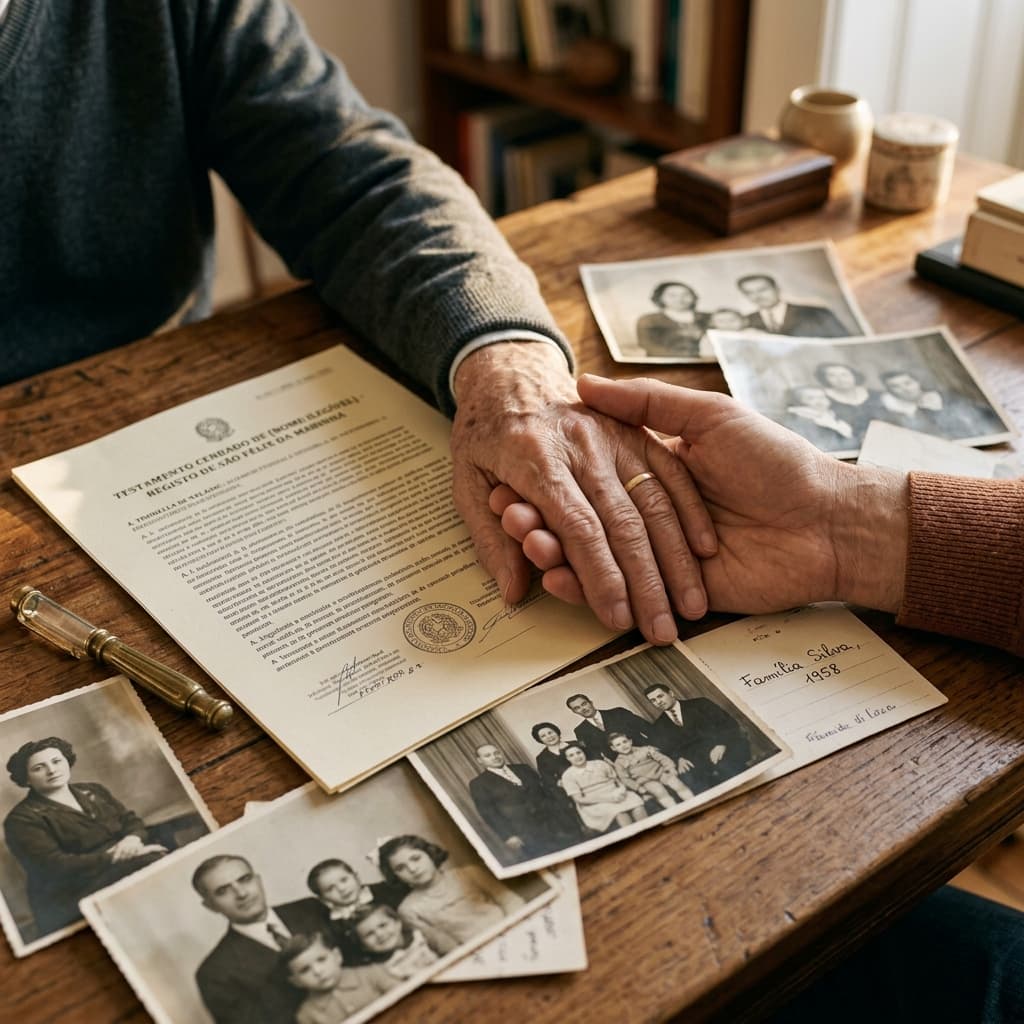
No Agreement
When the Heirs Cannot Agree
The inventory is meant to list the assets and debts, determine what each person is entitled to and put an end to the undivided state.
It is led by the head of the estate (cabeça de casal), who administers the estate until it is divided and who has duties of their own, and it goes through the meeting of interested parties (conferência de interessados).
There are matters that tend to be at the centre of the dispute and that are resolved within the inventory. Gifts made in life to children, subject to collation (colação). Bank accounts moved before or after the death. And assets that an heir uses without compensation.
The meeting of interested parties is also the moment when many end in agreement.
Before bringing or responding to an inventory, it is important to understand what is really in dispute.
Other Countries
Estates With a Link to Another Country
It is the matter in which most things depend on a decision taken before the death.
Which Law Governs the Succession
Since 2015, in successions with an international element, the European rule is that the applicable law is that of the State where the deceased had their habitual residence, and not that of their nationality.
A foreigner who lives in Portugal normally has their entire succession governed by Portuguese law, including the forced share that cannot be set aside (legítima).
Choosing the Law of Nationality
The rule can be set aside. A person may choose to have their succession governed by the law of the State of which they are a national, but that choice must be expressed, as a rule in a will.
It is a planning decision that can only be taken during one's lifetime, and that depends on comparing two legal systems.
Heirs in Another Country
There is a European Certificate of Succession, which proves the status of heir and is recognised in the other Member States without any additional procedure.
Deaths Abroad
A death that occurred in another country must be entered in the Portuguese register before the succession can proceed in Portugal. This is the transcription of the death record (transcrição de óbito), made at the Central Registry Office (Conservatória dos Registos Centrais), and we treat it as part of the process.
If the estate has assets or heirs outside Portugal, the first question is which law applies.
Leaving Things Decided
Wills and Succession Planning
A will cannot dispose of everything. The law reserves part of the estate for forced heirs (herdeiros legitimários), who are the spouse, descendants and ascendants.
This means there are things a will can do and others it cannot. It can choose who receives what within the disposable portion. It cannot remove those whom the law protects.
The Case of the Partner in a De Facto Union
Someone living in a de facto union (união de facto) is not an heir. They do not inherit by law, however many years the union has lasted. They have their own protection regarding the family home, and everything else depends on a will.
The House That Remains
Inherited Property
When the estate includes a property, there is a distinction that decides which procedural route is appropriate.
While the estate has not been divided, the heirs are not co-owners of the property. They are co-holders of a right over the whole estate, and therefore an action for division of co-owned property is not the proper route.
There is an exception worth knowing: when the undivided estate itself is co-owner of an asset together with third parties, an action for division of co-owned property may be brought, with the estate represented by all the heirs, provided that the co-owners and the extent of each one's right are known.
After the division has been made, if the assets remain in co-ownership between former heirs, that becomes the route.
Telling one situation from the other is analytical work and cannot be done without seeing the registries.
How We Work
How We Handle Inheritance Cases
We start by understanding what exists and who the interested parties are, before talking about division. It is at this stage that the questions that determine the rest appear.
Where there is room for agreement, we work on the agreement, because it is faster and costs everyone less. Where there is not, inventory is the way.
Everything said to the law office is covered by professional secrecy, which is a legal duty of the lawyer and extends to all the people who work in the office.
Each case has a lawyer in charge, who is the person who speaks to the client and accompanies them to the end.
Many of these cases are handled remotely, by power of attorney, with heirs in Brazil, in the United States and in other countries.
The scope of the work and the terms are defined case by case and communicated before any commitment. We reply to new enquiries within one business day, in Portuguese and in English.
We are a team of lawyers in Porto, working since 2011.
Frequently Asked Questions About Inheritance
Is there a deadline to divide the estate?
No. The estate can remain undivided indefinitely. What happens is that the problem worsens over time, because new heirs enter on the death of the first ones.
What costs does an inheritance process involve?
There are costs that do not depend on a lawyer and that are worth knowing from the start. Stamp Duty (Imposto do Selo) on gratuitous transfers is not due from the spouse, descendants or ascendants, but is due from the other heirs. The declaration of heirs and the deed of division have fixed official fees. The inventory has court costs that vary with the value of the estate and with the procedure. As for the law office’s fees, the scope and terms are defined after we analyse the case, and communicated before any commitment.
One of the heirs does not want to sell the house. What can be done?
The situation is resolved in an inventory, where the property is allocated to one of the interested parties with compensation to the others, or sold. An action for division of co-owned property is not the proper route while the estate has not been divided.
My father made me a gift during his lifetime. Does it count towards the inheritance?
It may. Gifts made in life to descendants are, as a rule, subject to collation, which is their return to the estate in order to equalise the division. But collation can be waived, and it is presumed to be waived for gifts of money.
I am a foreigner living in Portugal. Does my estate follow Portuguese law?
As a rule, yes, because the applicable law is that of the State of habitual residence at the date of death. It is possible to choose the law of nationality, but that choice must be expressed, as a rule in a will.
We live in a de facto union. Do I have a right to his estate?
Not by law. There is protection regarding the family home, and everything else depends on a will, within the margin that he can dispose of.
Speak to an Inheritance Lawyer in Portugal
Describe your situation. We will tell you what is at stake, which route makes sense and what has to be resolved first.